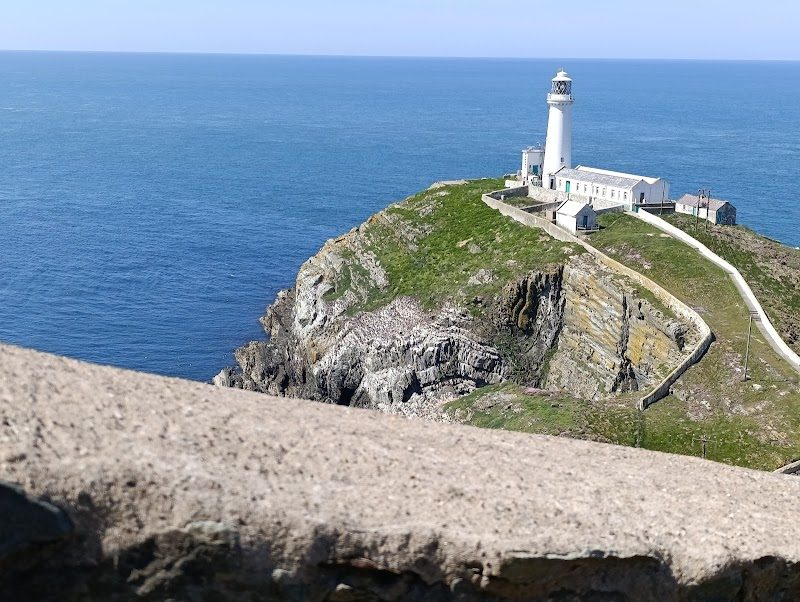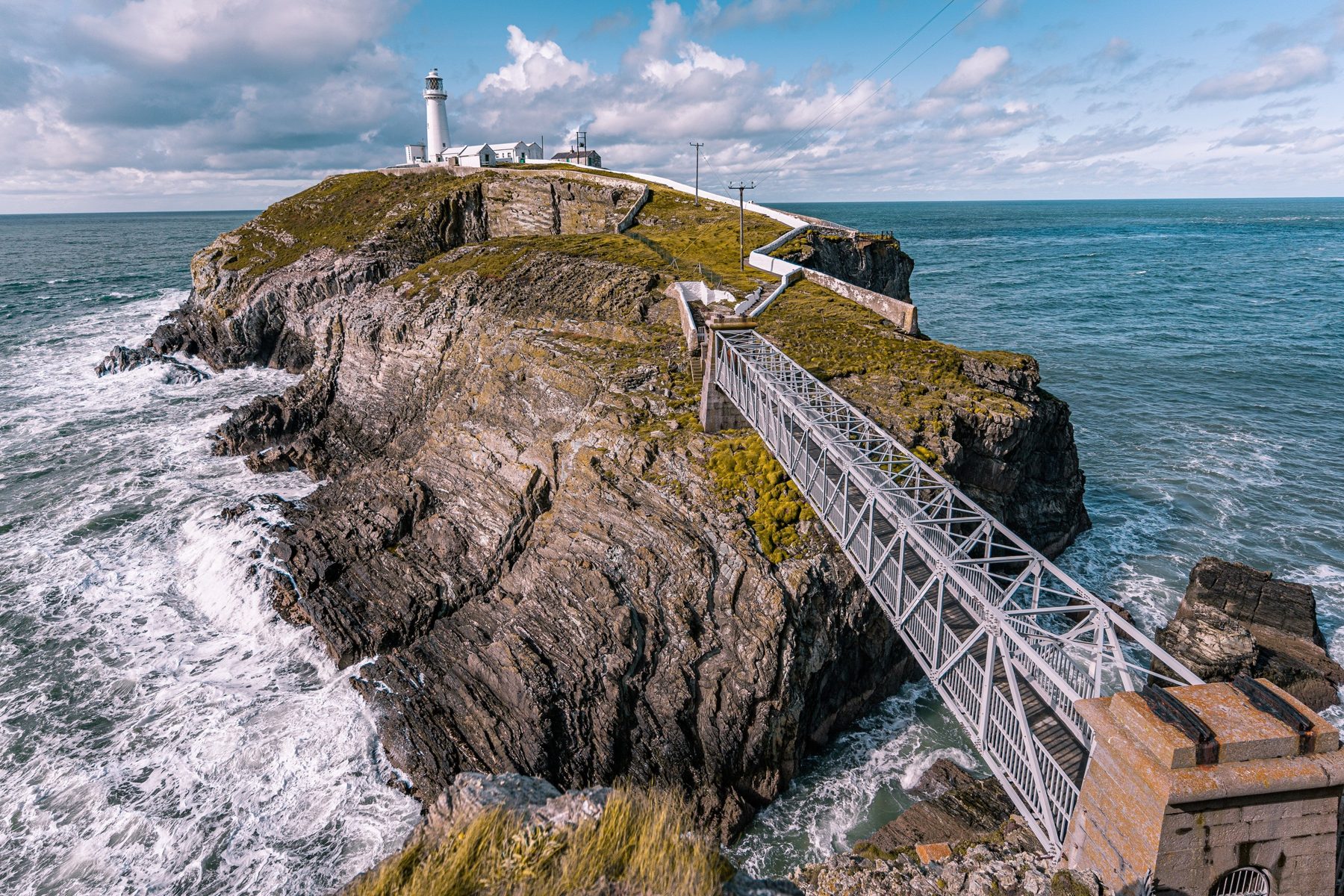
Perched on its own small island off the western tip of Anglesey, about 3 miles from Holyhead, South Stack Lighthouse has been guiding ships since 1809. The island's Welsh name is Ynys Lawd.
Its bright white tower stands out sharply against the dark cliffs and the Irish Sea, and you can pick it out from miles along the coast. It's a great spot for dramatic photos, seabird watching and big sea views, whatever the weather.
To reach the lighthouse itself you walk down around 400 steps cut into the cliff and cross a footbridge over the gorge. Then you climb every one of them back up again.
Read on for the facts, the history and the ghost story behind this landmark, which is now more than 200 years old.
Fascinating facts
- Tall order. The tower stands 28 metres (92 feet) high, about the length of a basketball court stood on its end.
- Thar she glows! The light gives one white flash every 10 seconds and can be seen up to 24 nautical miles (about 28 miles) out to sea. It shines through a first order, six panel rotating lens at 467,000 candela.
- Don't look down. The lighthouse sits on top of Ynys Lawd, with its light shining from 60 metres above high water.
- Around 400 steps. The way down is around 400 steps cut into the cliff, then a footbridge over the gorge. Every step has to be climbed again on the way back.
- Seabird city. The cliffs around the lighthouse are an RSPB reserve, home to thousands of guillemots and razorbills, with puffins in spring and summer and rare choughs all year round.
- Rock stars. The twisted, folded layers of rock in the cliffs are thought to date from the Cambrian era, and how they formed has long been debated.
History
Every place has a past, and South Stack is no exception. This stretch of coast was a dangerous one, and South Stack is the first light on Anglesey's north coast for ships heading east, warning them off the rocks on the way into Holyhead.
- 1665: a long wait. A petition for a patent to build a lighthouse here was put to King Charles II. It was turned down.
- 1808: work begins. Nearly 150 years later, the experienced mariner Captain Hugh Evans finally won the argument with Trinity House. Building started in August 1808 with Evans overseeing the work. The tower was designed by Trinity House surveyor Daniel Alexander, his first lighthouse, and built by Joseph Nelson. Stone was quarried on the island itself, and the limestone for the staircase came from Penmon.
- 9 February 1809: first light. The original light used oil lamps and reflectors turning on a clockwork base.
- Baskets over the gorge. At first there was no bridge. People and supplies crossed the chasm in a basket hung from a hemp cable.
- 1828: the first bridge. An iron suspension bridge finally made the crossing easier (if not the 400 steps).
- The 1830s: a light that went down the cliff. Fog and low cloud often hid the main light, so Evans added a lantern on wheels that could be lowered down a track on the cliff to just above the sea. A fixed low light at the western tip of the island replaced it in 1880.
- 1874: a taller tower. The tower was raised and given a new lantern.
- 1909 to 1938: brighter lights. An early incandescent light came in 1909, a mantle burner in 1927, and in 1938 the light went electric, powered by a diesel generator. Mains electricity reached the island in the 1960s, when the old bridge was also replaced.
- Life on the rock. Keepers' families lived on the island until 1935. One early keeper's widow, Ann Jones, even took over the job herself.
- 1984: the keepers leave. The lighthouse was automated in September 1984. It is now monitored remotely by Trinity House.
- 1997: open to visitors again. A new footbridge meant public tours could restart for the first time since the mid-1980s.
Today the lighthouse and the former keepers' cottages are Grade II listed buildings.
The legend of Jack Jones
South Stack is said to be haunted, and its ghost story begins with a real storm.
On 25 October 1859, the great storm in which the ship Royal Charter sank off the north coast of Anglesey was tearing across the island.
Assistant keeper Jack Jones, who had been born on the island, was making his way down the cliff to the lighthouse when a rock broke away from the cliff face and struck him on the head. Badly hurt, he dragged himself across the bridge to the lighthouse, but the howling wind drowned out his cries for help.
Head keeper Henry Bowen found him lying outside the lighthouse door the next morning. Jack Jones died of his injuries three weeks later.
Since then, people have reported heavy footsteps, rattling doors and knocking at the windows. Some say it's Jack, still trying to get in out of the storm. If you visit on a wild day, listen carefully.
For the story of the keeper who never made it home, read "The keeper who never left" on Discover Anglesey.
Seabirds, wildlife and Ellin's Tower
The cliffs either side of the lighthouse are the RSPB's South Stack Cliffs reserve. It is open all year, and parking charges apply.
- Late spring and early summer. Over 3,000 guillemots and around 1,000 razorbills pack the cliff ledges, along with puffins, plus kittiwakes, fulmars and shags. They start leaving in July and many are gone by the end of the month, so come early in the summer, ideally in the morning.
- All year round. South Stack is one of the few places in the UK where you can see choughs, rare red-legged crows, every month of the year. Look out for peregrine falcons and ravens too.
- Wild flowers. In spring the cliff tops are dotted with mauve spring squill and pink thrift. In high summer the heath turns purple and yellow with heather, gorse and rockrose. South Stack is one of only two places in Wales for the rare spotted rockrose, and the heath is managed for the silver-studded blue butterfly. It is the largest area of maritime heathland in North Wales, and adders and common lizards also live on the reserve.
- Out at sea. Harbour porpoises are most often seen in autumn, and grey seals use the sheltered coves. Manx shearwaters and gannets are sometimes seen off the coast.
Ellin's Tower is the little white castle on the cliff edge. It was built in 1868 as a summerhouse for Ellin, the wife of local MP William Owen Stanley of Penrhos. It is now a Grade II listed RSPB observation point with close-up views of the nesting seabirds and the lighthouse. Inside there are binoculars and telescopes, and live camera footage from the cliff face.
The RSPB visitor centre near the car park has a café, a shop and toilets. Drones are banned on the reserve from 1 March to 31 July to protect nesting birds.
Around South Stack
The lighthouse is only part of the story. Give yourself time to explore the headland around it.
- Cytiau'r Gwyddelod hut circles. Just across the road from the first car park on the way to South Stack are the stone foundations of an ancient farming settlement, looked after by Cadw. There may once have been at least 50 round houses here, and about 20 are still visible. Radiocarbon dating points to people living here from around 500 BC, and a hoard of Roman coins was found on the site. The name means "Irishmen's huts", but the settlement is older than the Irish settlers it was named after.
- Holyhead Mountain (Mynydd Twr). The highest point on Anglesey rises right behind South Stack. On the top are the walls of Caer y Tŵr, an Iron Age hillfort with ramparts up to 3 metres high, and the base of a Roman watchtower beside the trig point. On a clear day the views reach Eryri and sometimes Ireland.
- North Stack. Follow the coast path north over the mountain to North Stack and its old fog signal station.
- The rocks themselves. Look closely at the cliffs and you'll see layers of rock folded and faulted into tight zigzags. They are thought to date from the Cambrian era, and how they formed has long been debated.
The Wales Coast Path runs right past South Stack, and a 10 mile circular walk links Holyhead, the mountain, North Stack, South Stack and the hut circles. From the headland you can look across to the Llŷn Peninsula and Bardsey Island, and on a clear day you can see Ireland's Wicklow Mountains.
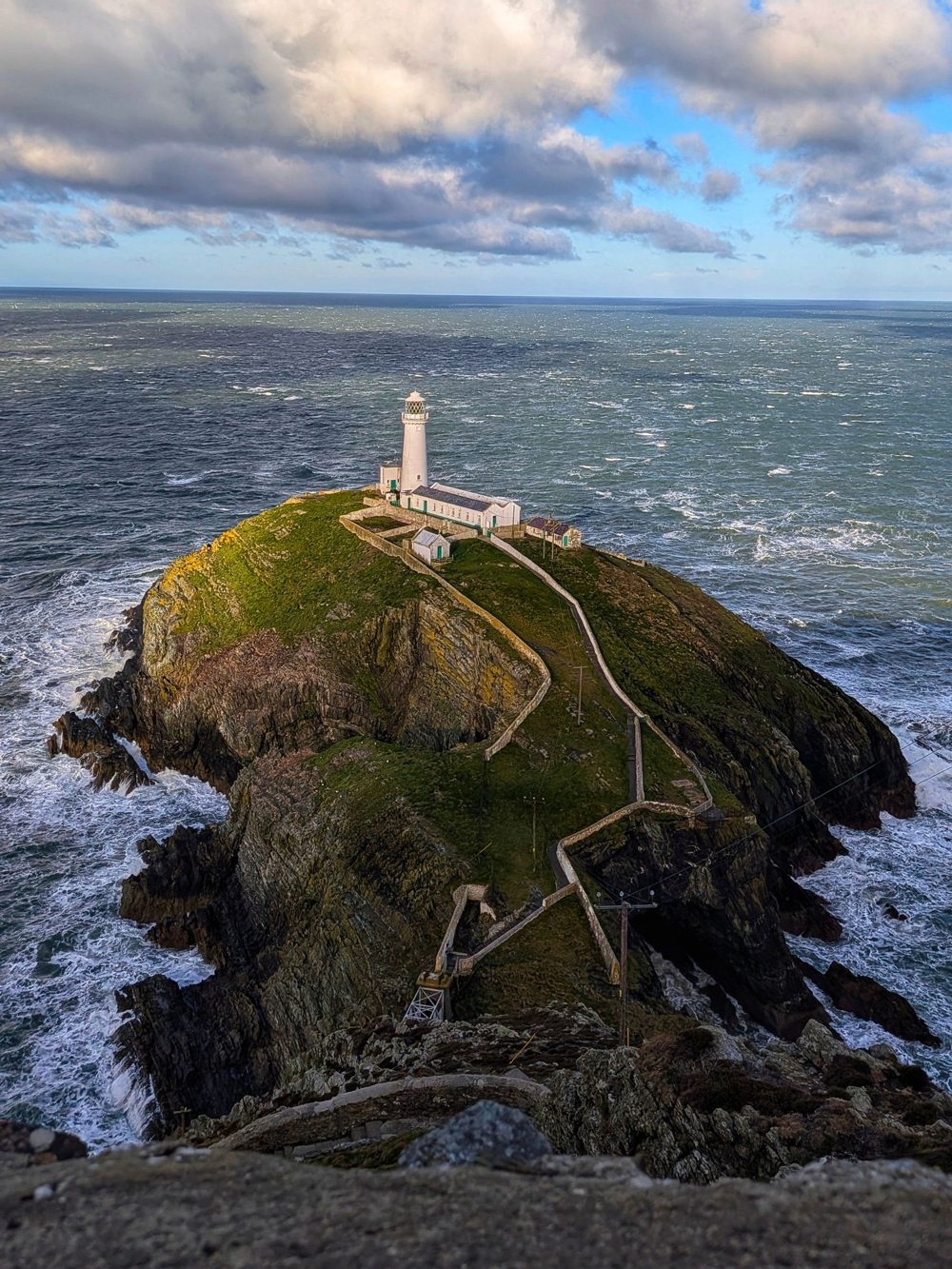
Photo:
Tripatpal Singh /Pexels,Pexels Licence
Local tips
- Do you dare? It's around 400 steps down, and the same 400 back up. Think about the climb out before you set off.
- The bridge. Crossing the bridge over the gorge to the island is a highlight of the visit.
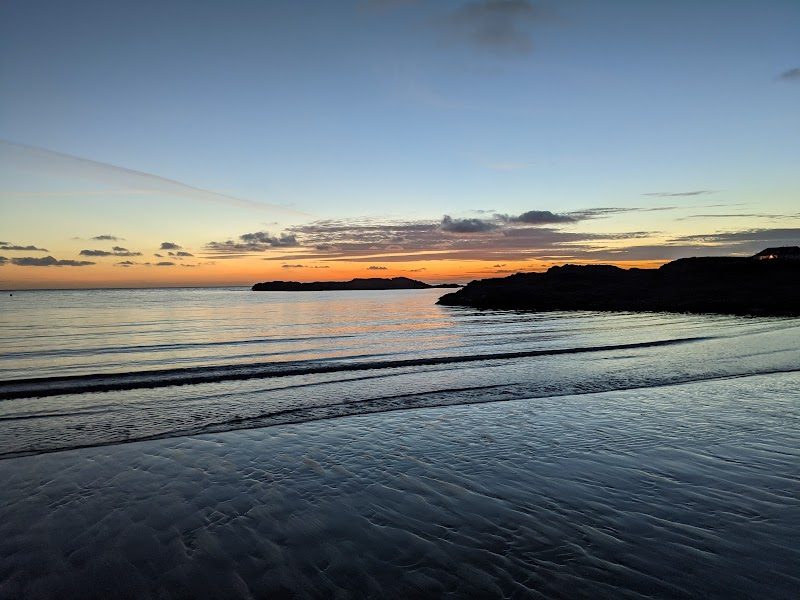
- Sunsets. South Stack is an amazing spot to watch the sun go down over the sea. Watch from beside Ellin's Tower or the top of the steps.
- Misty days. When the mist rolls in, you can hear the foghorn. It's eerie.
- After dark. Some say the lighthouse is haunted, and the light after dark is magical. Watch it from the cliff top. The island and the steps are only open in the lighthouse's opening hours, so don't try to go down at night, and take care on the paths in the dark.
- When to go. Summer weekends and spring school holidays are busiest in the middle of the day. Early morning or the evening light is much quieter. In winter it is quieter still, and a dramatic place to watch a storm from the cliff top.
- Parking. Parking is really tight when it is busy. The main car park fills up first, so on a busy day arrive early or look at the other parking nearby.
- The wind. It usually blows from the south-west and the headland is very exposed. A windproof jacket is a good idea even on a sunny day.
- What to bring. Sturdy shoes (no flip-flops), a windproof jacket, water, a camera, and binoculars for the choughs and seals.
- The famous view. The famous view of the lighthouse can only be had from the cliffs above, near Ellin's Tower, looking down. You lose it once you cross the bridge.
- Puffins. They head back out to sea by late July.
- Tea and scones. The café by the RSPB centre serves good food, and the scones and a cup of tea are a real treat after the climb back up.
Visiting South Stack
Common questions
- How many steps are there down to South Stack Lighthouse?
- Around 400, cut into the cliff, and the same number back up. There's also a footbridge over the gorge to the island.
- Can you go inside the lighthouse?
- Yes, when it's open for the season. Tours visit the old engine room and climb to the top of the tower. You need to be at least 1.1 metres tall to climb, so check the official page for opening days before you go.
- When is the best time to see puffins at South Stack?
- Late spring and early summer. The seabirds start leaving in July and many have gone by the end of the month. Choughs are there all year round.
- Do you have to pay to visit South Stack?
- Parking charges apply at the RSPB reserve, and lighthouse tours need a ticket. Check the RSPB and lighthouse websites for current charges.
- What is the Welsh name for South Stack?
- Ynys Lawd, the name of the small island the lighthouse stands on.
Photo credits
- South Stack lighthouse and its island, from the headland. Photo by Clément Proust, Pexels Licence, cropped, via Pexels.
- South Stack lighthouse seen from the cliffs above. Photo by Tripatpal Singh, Pexels Licence, cropped, via Pexels.
Details in this guide were checked in October 2026.