Ask anyone round here where to see puffins and you'll get a grin before you get an answer. Yes, we have an island called Puffin Island. And for most of the last century you'd have struggled to find a puffin on it. But that story is finally turning around, and if you know where to look, Anglesey is a cracking place to watch the little clowns of the sea. In Welsh, by the way, a puffin is a pâl.
When to come
Puffins only come ashore to breed. They arrive by mid-April, and the best viewing is May to early July, especially the first three weeks of June, when the adults fly in with beaks full of sand eels for their chicks. By late July they start leaving, and by the first weeks of August they're gone. They spend the winter far out in the Atlantic, and they even shed the bright colours of their bills until spring.
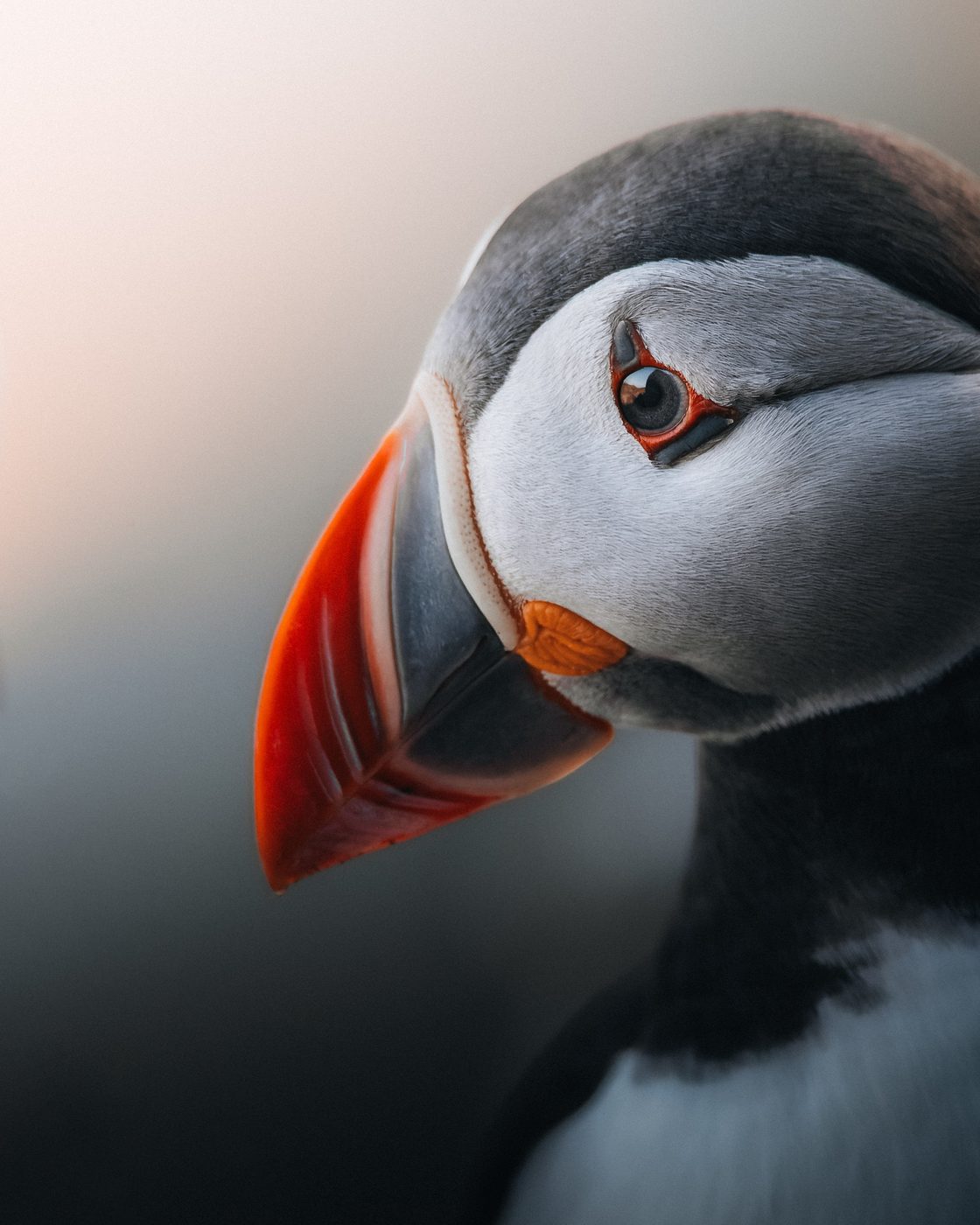
Photo:
sashamatic /Pixabay,Pixabay Content Licence
Puffin Island (Ynys Seiriol): the comeback
The island sits just off Penmon Point at Anglesey's eastern tip. It was once said to hold more than 50,000 puffins, and young birds were pickled and shipped off as a delicacy.
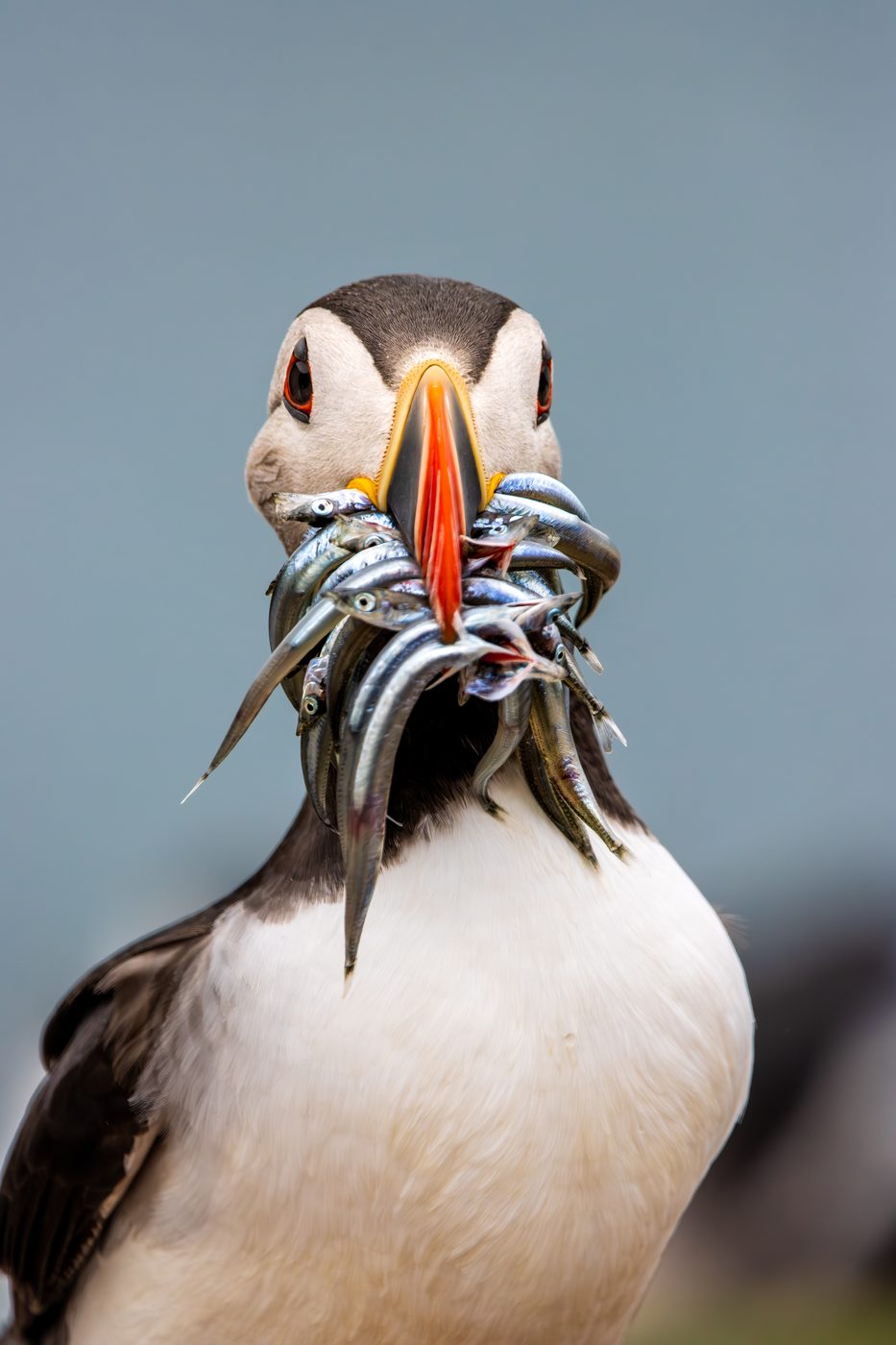
Photo:
Llanya /Pixabay,Pixabay Content Licence
Then, in the 1800s, a ship was wrecked nearby and the brown rats on board made it across to the island. Local accounts date the wreck to 1816. By the end of the 1800s the colony was down to around 2,000 pairs, and by the 1990s fewer than 20 pairs were left.
In 1998 a poisoning programme wiped out the rats. But the grass then grew so long the puffins struggled to burrow. Rabbits were suggested to keep it short, and local stories say rabbits turned up on the island anyway, though nobody has ever owned up. Then the rats came back. Over two winters, North Wales Wildlife Trust, working for Natural Resources Wales with the help of 90 volunteers, tracked them down, and the last two were caught in March 2025. One of the skippers who goes out daily says they're seeing more and more puffins.
The island is privately owned and boat trips don't land. Even without a puffin it's a brilliant trip. One of the biggest cormorant colonies in Britain nests here, alongside guillemots, razorbills, kittiwakes and shags, with grey seals hauled out on the rocks. Keep an eye out for black guillemots too. A few pairs live in these waters.
A local story: the island is named for St Seiriol, a 6th-century saint who founded the church at Penmon and retired to the island in old age. The Vikings called it Priestholm, and it has only been Puffin Island in English since the 19th century. The legend goes that Seiriol met his friend St Cybi of Holyhead in the middle of Anglesey, at the wells of Clorach near Llannerch-y-medd. Cybi walked into the sun both ways and got a tan, while Seiriol always had it at his back. So they became Cybi Felyn, "Cybi the Tanned", and Seiriol Wyn, "Seiriol the Fair". It's a lovely tale, though historians reckon it's later folklore.
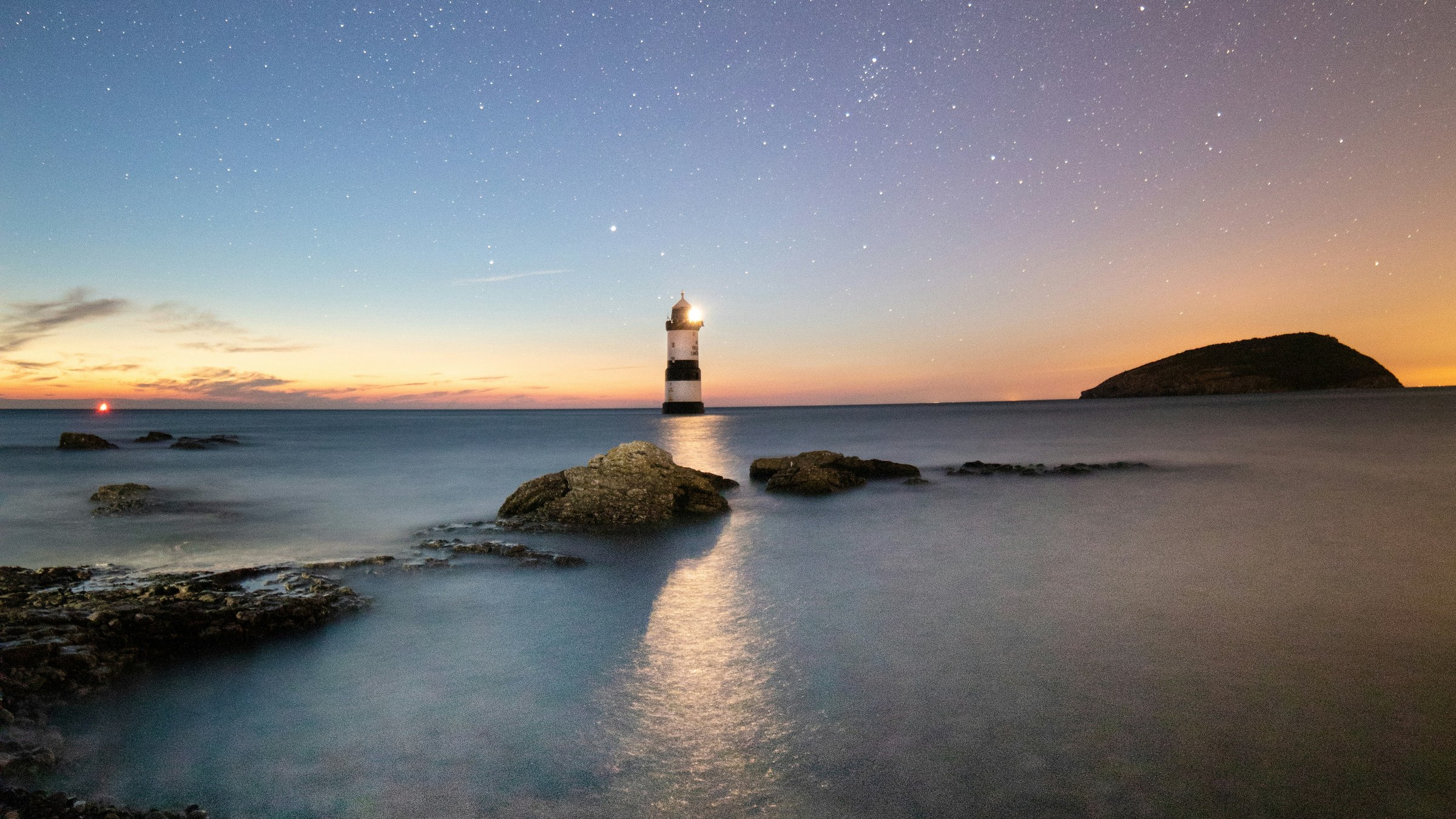
Another one: the black-and-white Trwyn Du lighthouse off Penmon Point was built in 1838. Its fog bell has rung every 30 seconds since 1922. In 2019 Trinity House proposed replacing it with a foghorn, which met strong local opposition, and the bell is still there today.
Puffin Island has a story of its own: read it on Discover Anglesey.
Boat trips to Puffin Island (2026 prices, check with the operator before you book)
- Seacoast Safaris, Beaumaris Pier: the Puffin Island Cruise is 80 minutes, daily from April to October, weather permitting. Adults £20.95, ages 11 to 16 £14.95, ages 4 to 10 £11.95. Look out for cheaper 9.15am early-bird sailings in peak season. Check in at the kiosk 30 minutes before you sail, because they won't wait.
- Starida, Beaumaris Pier: the Puffin Island Wildlife Cruise is 75 minutes, daily from April to October. Adults £21.09, ages 12 to 16 £15.79, ages 3 to 11 £10.49. Well-behaved dogs travel free. Collect your boarding cards 20 minutes before departure.
- Anglesey Boat Trips (Seawake), Beaumaris Pier: fast RIB trips of about an hour for £35 a person. No under-4s and no dogs.
- RibRide, Menai Bridge: an 80-minute RIB trip to Puffin Island for £48 a person, from age 4. No dogs.
South Stack: puffins from dry land
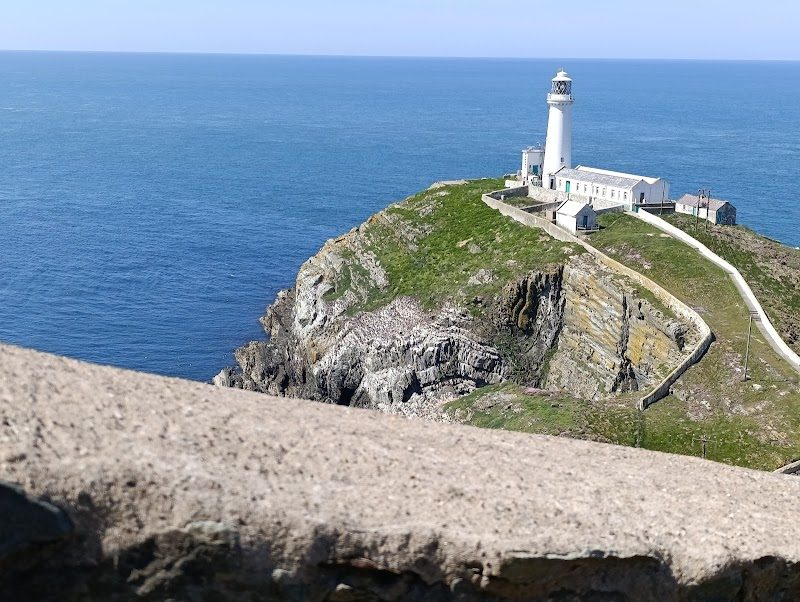
If you'd rather keep your feet dry, head to RSPB South Stack, just past Holyhead. In spring the cliffs are a breeding ground for guillemots, razorbills and a small number of puffins, so bring binoculars and patience.
Your best viewpoint is Ellin's Tower, the little white castle on the cliff. William Owen Stanley built it in 1868 for his wife, Ellin.
Below it, South Stack Lighthouse stands on its own islet, reached by around 400 steps down the cliff. Read our full South Stack guide.
Look out for choughs too, the red-billed crows that live on these cliffs all year round.
The Skerries: the island's best-kept secret
Most visitors never hear about the Skerries, the rocky islets off north-west Anglesey that hold Britain's biggest Arctic tern colony. The puffins have quietly boomed out there too. In June 2025, RSPB wardens counted 1,212 occupied puffin burrows, the highest count ever recorded and more than double the 2019 total. That makes the Skerries the most important puffin site in North Wales and the third in Wales.
Anglesey Fishing and Boat Trips has run 2.5-hour RSPB-guided catamaran trips out to the Skerries. Check their website for next season's dates and prices.
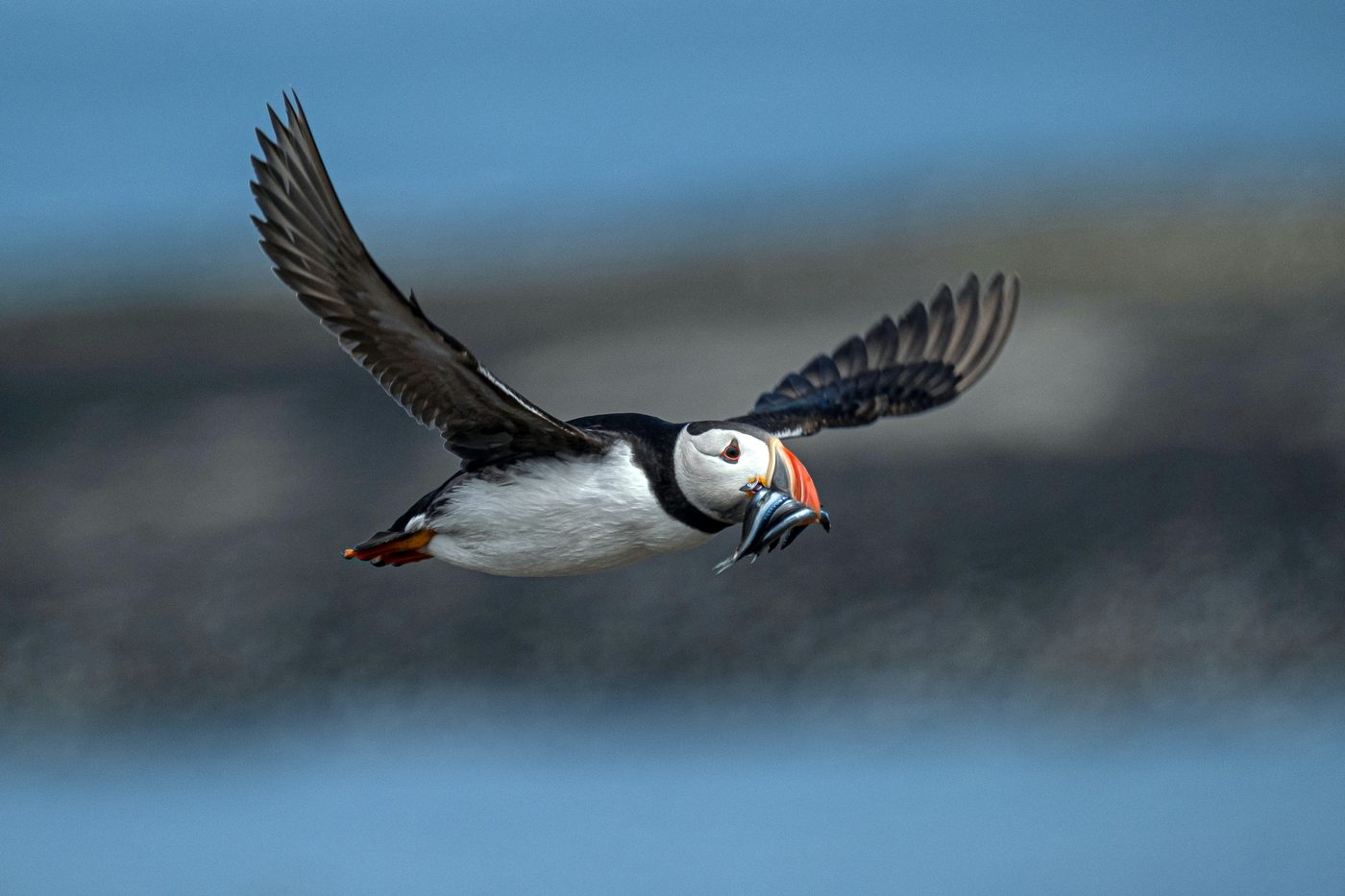
Photo:
Phil Robson /Unsplash,Unsplash Licence
Puffin facts to impress the kids
- Each pair lays just one egg a year.
- A typical puffin lives around 18 years and starts breeding at about five. The oldest ringed in Britain reached 42.
- Puffins are on the UK Red List, and the UK lost 23% of them in 20 years. Every Anglesey comeback matters.
A few tips from a local
- Calm and clear beats everything. Wind and swell hide puffins and cancel boats.
- Bring binoculars, even on a boat.
- Dress for the sea. It's chilly on the water even in June, and RIBs can get splashy.
- Give them space. Stick to the paths at South Stack, never fly a drone near the cliffs, and leave the islands to the birds.
Photo credits
- Trwyn Du lighthouse at Penmon at dusk, with Puffin Island beyond. Photo by Neil Thomas, Unsplash Licence, via Unsplash.
- Atlantic puffin close-up. Photo by sashamatic, Pixabay Content Licence, via Pixabay.
- Atlantic puffin carrying sand eels in its beak. Photo by Llanya, Pixabay Content Licence, via Pixabay.
- Atlantic puffin in flight carrying sand eels. Photo by Phil Robson, Unsplash Licence, via Unsplash.
Details checked November 2026.